
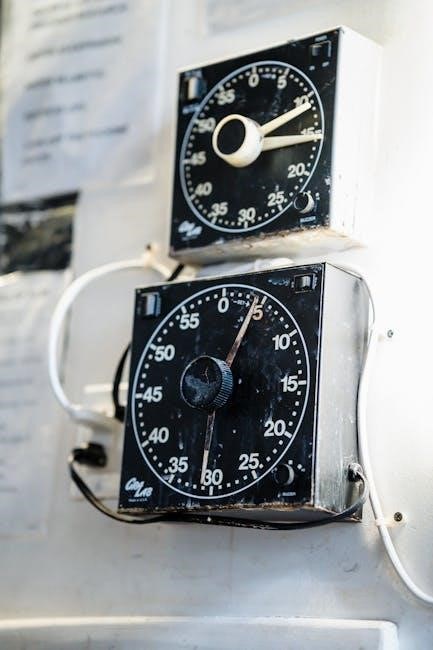
Tork Timers, like the 402B and 701A models showcased in online videos and images, offer reliable mechanical timing solutions.
These devices, frequently found on platforms like YouTube and Mungfali.com, provide simple, robust control for various applications.
Today is 12/30/2025 23:39:12 ()
What is a Tork Timer?
Tork Timers are electromechanical timing devices, notably models like the 402B and 701A, designed for precise on/off control of electrical circuits. These timers, often highlighted in product videos on platforms like YouTube, utilize a mechanical cam and motor system to achieve accurate timing without the complexities of digital programming.
Unlike digital timers, Tork Timers offer a straightforward, durable solution, making them ideal for applications where reliability and simplicity are paramount. They function by allowing users to set specific ‘on’ and ‘off’ durations using a rotating dial; The internal motor drives the cam, which opens and closes electrical contacts according to the set schedule.
Information available online, including images from sites like Mungfali.com, demonstrates their robust construction and ease of use. They are commonly used in industrial, commercial, and even residential settings.
Common Applications of Tork Timers

Tork Timers, including the popular 402B and 701A models, find diverse applications due to their reliable timing capabilities. They are frequently employed in controlling lighting systems, such as outdoor security lights or indoor grow lights, ensuring they operate only during specific hours.
Industrial applications include controlling pumps, motors, and ventilation systems, optimizing energy usage and equipment lifespan. Furthermore, Tork Timers are utilized in agricultural settings for irrigation systems and livestock management. Their mechanical nature makes them suitable for environments where digital timers might be susceptible to interference or damage.
Online resources, like YouTube product videos, showcase these applications. Their simplicity and durability make them a preferred choice for repetitive timing tasks across various sectors;

Tork Timer Models
Tork offers a range of mechanical timers, notably the 402B, highlighted in product videos, and the 701A, with images available online for review.
Tork 402B: Overview and Features
The Tork 402B is an indoor mechanical timer, frequently demonstrated in product videos available on platforms like YouTube. This model is characterized by its robust construction and straightforward operation, making it a popular choice for various timing applications.
Key features include a dial-based setting for on and off times, allowing for precise control over connected devices. The 402B is designed for simple installation and offers a reliable, non-digital timing solution. It’s often used for controlling lights, fans, and other electrical equipment on a scheduled basis.
Online resources showcase its compact size and ease of use. The timer’s mechanical nature eliminates the need for batteries or programming, providing a dependable and consistent performance. It’s a cost-effective solution for automating basic timing tasks within indoor environments.
Tork 701A: Overview and Features
The Tork 701A is another popular indoor mechanical timer, often visually represented in online image searches and product listings like those found on Mungfali.com. Similar to the 402B, it provides a reliable and user-friendly timing solution without the complexities of digital programming.
This model features a mechanical dial for setting on and off times, offering a tactile and intuitive control experience. The 701A is designed for a range of applications, including controlling lighting, appliances, and other electrical devices on a pre-determined schedule.
Its durable construction ensures long-lasting performance, and its simple design makes it easy to install and operate. The 701A is a practical choice for automating tasks where a straightforward, mechanical timer is preferred, offering consistent and dependable timing functionality.
Comparing Tork 402B and 701A
Both the Tork 402B and 701A are robust indoor mechanical timers, frequently demonstrated in product videos like the one available on YouTube. While sharing core functionality – providing scheduled on/off control – subtle differences exist.
The 402B, highlighted in online resources, appears to have a slightly more compact design. Both models utilize a mechanical dial for time setting, ensuring ease of use without digital programming. Their applications overlap significantly, encompassing lighting, appliances, and general electrical control.
Ultimately, the choice between the 402B and 701A often comes down to specific installation requirements and aesthetic preference. Both deliver dependable, mechanical timing, making them suitable for various automation needs, as showcased in image searches and product details.

Installation Guide
Proper installation of your Tork Timer, referencing wiring diagrams, is crucial for safe and effective operation. Always prioritize safety precautions during setup!
Today is 12/30/2025 23:39:12 ()
Mounting the Tork Timer
Secure mounting is essential for reliable Tork Timer operation. Begin by selecting a suitable location, ensuring it’s protected from extreme temperatures and moisture. The timer can be mounted directly to a wall or panel using screws – pre-drilled holes are typically provided on the timer’s housing.
Ensure the mounting surface is stable and can support the timer’s weight. Avoid locations prone to vibration, as this can affect timing accuracy. Before tightening screws, verify the timer is level to prevent internal mechanism strain.
Carefully consider wire access when choosing a mounting spot, allowing sufficient space for connections. Do not overtighten screws, as this could damage the timer’s casing. A properly mounted timer contributes significantly to its longevity and performance.
Today is 12/30/2025 23:39:12 ()
Wiring Diagrams for Different Applications
Proper wiring is crucial for safe and effective Tork Timer use. While specific diagrams vary based on the model (402B, 701A) and application, common configurations include simple on/off control for lighting, pumps, or heaters.
Typically, the timer features terminals for Line (Hot), Neutral, and Load. Always disconnect power before making any connections. Ensure wire gauge is appropriate for the load current. Incorrect wiring can damage the timer or connected equipment.
Refer to the timer’s internal diagram (often found on the casing) for precise terminal identification. For more complex setups, consult a qualified electrician. Online resources, like YouTube videos showcasing the 402B, can provide visual guidance. Always double-check connections before restoring power.
Today is 12/30/2025 23:39:12 ()
Safety Precautions During Installation
Prioritize safety during Tork Timer installation. Always disconnect power at the circuit breaker before commencing any wiring work. Never attempt installation if you are uncomfortable working with electrical systems; consult a qualified electrician.
Ensure the timer is mounted securely in a dry location, protected from the elements. Avoid exceeding the timer’s voltage and current ratings, as this can create a fire hazard. Inspect wiring for damage before connecting it to the timer.
Double-check all connections to prevent short circuits. Do not use damaged or frayed wires. Follow local electrical codes and regulations. Refer to the timer’s documentation for specific safety guidelines. Proper installation minimizes risks and ensures reliable operation.
Today is 12/30/2025 23:39:12 ()

Operating Instructions
Tork Timers, like the 402B, utilize a mechanical dial for setting on and off times. Understanding the dial’s markings is key to precise scheduling.
Today is 12/30/2025 23:39:12 ()
Setting the On and Off Times
To set the on and off times on your Tork Timer, begin by locating the timer dial. This dial features a 24-hour clock face with segmented blocks representing time intervals. These blocks, often silver-colored, are movable and determine when the timer is ‘on’.
First, identify the current time. Then, move the blocks to cover the hours during which you want the connected device to be active. For example, if you want a light to turn on at 6 PM and off at 10 PM, position the blocks to cover those hours on the dial.
Ensure that no silver blocks cover the hours you want the device to remain off. A precise setting is crucial for accurate timing, as demonstrated in product videos available online. Double-check your settings before finalizing them.
Today is 12/30/2025 23:39:12 ()
Understanding the Timer Dial
The Tork Timer dial is the central control mechanism, featuring a 24-hour clock face. Silver-colored blocks, or segments, encircle this face and are key to programming the timer. Each block represents a specific time interval; moving a block to cover a portion of the dial activates the timer during that period.
Observe that the dial’s design allows for multiple ‘on’ and ‘off’ cycles within a 24-hour period. The precision of these settings dictates the accuracy of the timing. Online resources, including YouTube product videos, visually demonstrate how to manipulate these blocks effectively.
Familiarize yourself with the dial’s markings and the movement of the blocks to fully grasp its functionality. Proper understanding ensures accurate and reliable operation of your Tork Timer.
Today is 12/30/2025 23:39:12 ()
Using the Override Function
The Tork Timer’s override function allows for temporary manual control, bypassing the programmed schedule. This is particularly useful when needing immediate operation outside of the set timings. Typically, this function is activated via a clearly labeled switch, often positioned prominently on the timer’s faceplate.
Engaging the override switch forces the timer into the ‘on’ position, regardless of the dial settings. However, remember that this is a temporary state; once deactivated, the timer reverts to its programmed schedule. Online resources, like product videos, demonstrate the override switch’s location and operation.
Utilize the override function cautiously, as prolonged use defeats the purpose of automated timing.
Today is 12/30/2025 23:39:12 ()

Troubleshooting Common Issues
Common problems with Tork Timers include failure to power on, incorrect timing, or not turning off. Carefully review wiring and dial settings.
Today is 12/30/2025 23:39:12 ()
Timer Not Turning On
If your Tork Timer fails to power on, several factors could be at play. First, verify the power source is active and supplying the correct voltage, as specified in the technical specifications. Double-check all wiring connections, ensuring they are secure and correctly matched to the wiring diagrams for your specific application.
Inspect the timer’s internal fuse (if equipped) for any signs of damage or breakage. A blown fuse will immediately prevent operation. Also, confirm the timer dial is not set to an “off” or bypassed position. Sometimes, a simple reset – turning the dial completely off and then back on – can resolve the issue. If the problem persists, consider the age of the timer and potential internal component failure, necessitating repair or replacement.
Today is 12/30/2025 23:39:12 ()
Timer Not Turning Off
If your Tork Timer continues to operate beyond the set “off” time, the issue likely lies within the mechanical timing mechanism. Carefully examine the timer dial and ensure it has fully rotated to the designated “off” position. Check for any obstructions preventing the dial from completing its cycle – dust or debris can sometimes interfere with smooth operation.
Inspect the cam or trip mechanism inside the timer (if accessible) for damage or misalignment. A faulty cam can cause the contacts to remain engaged. Avoid forcing the dial, as this could cause further damage. If the timer has an override function, confirm it isn’t inadvertently engaged. If these steps don’t resolve the issue, professional repair or replacement may be necessary.
Today is 12/30/2025 23:39:12 ()
Inaccurate Timing
Experiencing inaccurate timing with your Tork Timer can be frustrating. First, verify the timer dial is correctly set for the desired on and off durations. Minor inaccuracies can occur due to slight mechanical variations, but significant deviations indicate a problem. Ensure the timer is mounted securely, as vibrations can affect its precision.
Inspect the internal mechanism for wear or damage, particularly the gears and cam. Lubrication (if applicable, consult the model’s specifications) might improve performance. If the timer has been exposed to extreme temperatures or humidity, this could contribute to timing errors. If the problem persists, consider replacing the timer for consistent and reliable operation.
Today is 12/30/2025 23:39:12 ()

Maintenance and Care
Regular cleaning with a dry cloth keeps your Tork Timer functioning optimally. Avoid harsh chemicals. Battery replacement (if applicable) ensures continued operation.
Today is 12/30/2025 23:39:12 ()
Cleaning the Timer
Maintaining a clean Tork Timer is crucial for its longevity and accurate performance. Dust and debris can interfere with the mechanical components, leading to malfunctions or inaccurate timing. Always disconnect the timer from the power source before commencing any cleaning procedures to prevent electrical shock.
Use a soft, dry cloth to gently wipe down the exterior casing of the timer. Avoid using abrasive cleaners, solvents, or excessive moisture, as these can damage the plastic or metal components. For stubborn dirt or grime, a slightly dampened cloth may be used, but ensure it is wrung out thoroughly to prevent water from entering the timer’s internal mechanisms.
Pay particular attention to the timer dial and any ventilation openings, ensuring they are free from obstructions; Do not attempt to disassemble the timer for cleaning purposes, as this could void any warranty and potentially damage the delicate internal parts. Regular, gentle cleaning will help keep your Tork Timer operating smoothly for years to come.
Today is 12/30/2025 23:39:12 ()
Replacing the Battery (if applicable)
Some Tork Timer models utilize a battery to maintain programmed settings during power outages. If your timer features a battery, it will need periodic replacement to ensure continued functionality. Always consult the specific model’s documentation to determine the correct battery type and replacement procedure.
Typically, battery replacement involves accessing a battery compartment located on the timer’s casing. Use a small screwdriver to carefully open the compartment and remove the old battery. Ensure correct polarity when inserting the new battery, matching the positive (+) and negative (-) terminals.
Once the new battery is installed, close the compartment securely. It may be necessary to reprogram the timer settings after a battery replacement. Dispose of the old battery responsibly, following local regulations for battery recycling. Regular battery checks will prevent unexpected setting losses.
Today is 12/30/2025 23:39:12 ()
Storage Recommendations
Proper storage is crucial for maintaining the longevity and functionality of your Tork Timer. If you need to store the timer for an extended period, ensure it’s in a clean, dry environment, protected from dust, moisture, and extreme temperatures. Avoid storing the timer in direct sunlight or near heat sources.
Before storage, it’s advisable to remove any batteries to prevent corrosion and potential damage. Store the timer in its original packaging if available, or use a protective container to shield it from physical impacts. Keep the timer away from magnetic fields, which could potentially interfere with its internal mechanisms.
Regularly inspect the stored timer for any signs of damage or deterioration. Following these storage recommendations will help ensure your Tork Timer remains in optimal working condition when you’re ready to use it again.
Today is 12/30/2025 23:39:12 ()
Technical Specifications
Tork Timers, such as the 402B and 701A, feature specific voltage and current ratings, alongside defined timing ranges for diverse applications.
Today is 12/30/2025 23:39:12 ()
Voltage and Current Ratings
Tork Timers, including the popular 402B and 701A models, are designed to operate within specific electrical parameters to ensure safe and reliable performance. Understanding these ratings is crucial for proper installation and operation.
Generally, Tork Timers are built for standard 120-volt AC circuits, commonly found in residential and commercial settings. However, it’s vital to always verify the exact voltage requirement printed directly on the timer unit itself. The current rating, typically expressed in Amperes (Amps), indicates the maximum load the timer can safely handle.
The 402B, for instance, often supports loads up to 15 Amps, while the 701A may have a slightly different capacity. Exceeding these ratings can lead to timer malfunction, damage, or even a fire hazard. Always consult the product documentation or a qualified electrician to determine the appropriate Tork Timer for your specific application and electrical setup.
Today is 12/30/2025 23:39:12 ()
Timing Range
Tork Timers, such as the 402B and 701A, offer a versatile range of timing options to suit diverse applications. The timing range defines the duration for which a connected load can be automatically switched on or off.
Typically, these mechanical timers provide a timing span from several minutes to a maximum of 12 hours. The 402B, frequently demonstrated in online product videos, often features a timing range extending up to 12 hours, ideal for lighting or appliance control. The 701A may offer a slightly different maximum duration.
The timer dial allows precise setting of the desired on and off times. It’s essential to understand the dial’s markings and increments to achieve accurate timing. Always test the timer after setting to confirm it operates as intended, ensuring the correct duration for your specific needs.
Today is 12/30/2025 23:39:12 ()
Environmental Operating Conditions
Tork Timers are primarily designed for indoor use, as highlighted in product descriptions and instructional videos featuring models like the 402B. Exposure to harsh outdoor elements can compromise their functionality and lifespan.
Optimal operating temperatures generally range from 32°F to 122°F (0°C to 50°C). Avoid installing the timer in areas with excessive humidity, as moisture can cause corrosion and electrical malfunctions. Furthermore, protect the timer from direct sunlight and extreme temperature fluctuations.
These timers are not intended for use in environments with conductive contaminants, such as corrosive gases or dust. Maintaining a clean and dry operating environment will ensure reliable performance and extend the timer’s service life.
Today is 12/30/2025 23:39:12 ()

Frequently Asked Questions (FAQ)
Tork Timers are indoor devices; outdoor use isn’t recommended. They handle various loads, and resetting usually involves adjusting the dial to the desired time.
Today is 12/30/2025 23:39:12 ()
Can Tork Timers be used outdoors?
Generally, Tork Timers are designed for indoor use only. Exposure to the elements – rain, snow, direct sunlight, and fluctuating temperatures – can significantly compromise their mechanical operation and lifespan. The internal components, including the delicate timing mechanism, are not sealed against moisture or extreme conditions.
While some users might attempt to shield a Tork Timer, this is not a recommended practice and will likely void any warranty. Consistent exposure to humidity can cause corrosion, leading to inaccurate timing or complete failure. Furthermore, extreme temperatures can affect the calibration and performance of the timer.
For outdoor timing applications, it’s crucial to select timers specifically rated for outdoor environments, featuring weatherproof enclosures and robust construction. These specialized timers are built to withstand the challenges posed by the elements, ensuring reliable operation over extended periods.
Today is 12/30/2025 23:39:12 ()
What type of loads can a Tork Timer handle?
Tork Timers, such as the 402B and 701A models, are typically designed for controlling relatively low-power loads. They are commonly used with lighting circuits, fans, small motors, and similar applications. However, it’s crucial to check the specific voltage and current ratings of your particular Tork Timer model before connecting any load.
Exceeding these ratings can damage the timer and potentially create a fire hazard. Do not use Tork Timers to control high-power appliances like heaters, air conditioners, or large industrial equipment. These require heavy-duty timers with higher capacity. Always consult the timer’s specifications and ensure compatibility with the intended load.
Using a Tork Timer within its rated limits ensures safe and reliable operation, maximizing its lifespan and preventing potential electrical issues.
Today is 12/30/2025 23:39:12 ()
How do I reset a Tork Timer?
Resetting a Tork Timer generally involves returning the timer dial to the “Off” position and then re-setting the desired “On” and “Off” times. The exact procedure can vary slightly depending on the specific model, like the 402B or 701A. Typically, you’ll need to rotate the dial completely counter-clockwise past the “Off” position, then begin setting the timing sequence again.
If the timer isn’t responding, ensure the power supply is active. A complete power cycle – turning the power off and then back on – can sometimes resolve minor glitches. Refer to the product video resources available on platforms like YouTube for visual guidance.
Always double-check your settings after resetting to ensure accurate timing.
Today is 12/30/2025 23:39:12 ()

Resources and Support
For detailed guidance, explore YouTube videos showcasing Tork Timer models like the 402B.
Mungfali.com and other online resources offer additional support and images.
Today is 12/30/2025 23:39:12 ()
Where to Find Additional Information
Expanding your knowledge of Tork Timers beyond this manual is readily achievable through several online avenues. YouTube serves as a valuable resource, hosting product videos like the one demonstrating the Tork 402B’s functionality. These visual guides can clarify installation and operation procedures.
Furthermore, websites such as Mungfali.com compile images and discussions related to various Tork Timer models, including the 701A. Searching online using specific model numbers will yield a wealth of information, including user forums and potential troubleshooting tips. Remember to verify the source’s reliability when consulting external resources.
For a broader understanding of electrical timers and their applications, consider exploring general electrical engineering websites and online communities. These platforms often feature detailed explanations and diagrams that can complement the Tork Timer-specific documentation.
Today is 12/30/2025 23:39:12 ()
Contacting Tork Support
Direct assistance with your Tork Timer can be obtained through Tork’s official support channels. While specific contact details aren’t readily available in the provided search snippets, a comprehensive search on the manufacturer’s website is the recommended first step. Look for a “Contact Us” or “Support” section.
Typically, manufacturers offer multiple support options, including phone support, email inquiry forms, and online chat features. Prepare your Tork Timer model number (e.g., 402B or 701A) before contacting support to expedite the assistance process.
Having a clear description of the issue you’re experiencing, along with any relevant details about your setup, will also be beneficial. If online resources prove insufficient, direct communication with Tork Support is the most reliable way to resolve complex problems.
Today is 12/30/2025 23:39:12 ()