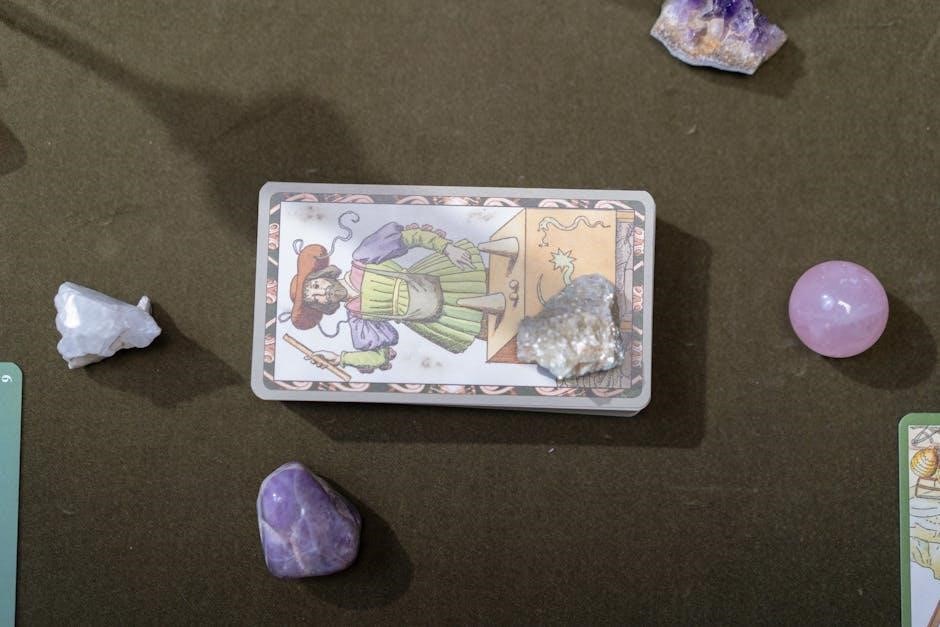
Celestial Tarot unveils a mystical path‚ blending ancient wisdom with 78 cards‚ offering intuitive guidance through astrology‚ numerology‚ and symbolic imagery.
What is Celestial Tarot?
Celestial Tarot is a divinatory practice utilizing a 78-card deck steeped in astrological and symbolic correspondences. Unlike traditional Tarot‚ it deeply integrates celestial influences – planetary alignments‚ zodiac signs‚ and cosmic energies – into its interpretations. Each card isn’t merely a standalone archetype‚ but a microcosm reflecting the macrocosm of the universe.
Reading isn’t about memorizing rigid definitions; it’s about observing imagery‚ trusting intuition‚ and relating the cards to personal experiences. The deck serves as a tool for self-reflection‚ offering guidance and insight into life’s journey. It’s a spiritual practice‚ not a fortune-telling mechanism‚ encouraging a ‘go with the flow’ approach. Choosing a deck is personal‚ like selecting a roommate – find one that resonates with you!
The History of Tarot and Celestial Influences
Tarot’s origins trace back to 15th-century Italy‚ evolving from playing cards to a tool for esoteric exploration. However‚ the connection to celestial bodies is deeply rooted in antiquity. Ancient civilizations‚ including the Romans (with Caelus/Coelus representing the sky)‚ and the Chinese‚ who referred to their empire as the “Celestial Empire‚” recognized the influence of the heavens on earthly affairs.
Early Tarot scholars integrated astrology‚ Kabbalah‚ and Hermeticism‚ recognizing planetary and zodiacal associations within the cards. This tradition continued‚ influencing modern decks like the Celestial Tarot‚ which explicitly emphasizes these connections. The surge in Tarot’s popularity‚ fueled by social media‚ demonstrates a renewed interest in self-discovery and spiritual guidance‚ echoing ancient practices of seeking wisdom from the cosmos.

Understanding the 78 Cards
The Tarot consists of 78 cards: the 22 Major Arcana representing life lessons‚ and 56 Minor Arcana reflecting daily experiences and challenges;
The Major Arcana: The Soul’s Journey
The Major Arcana‚ comprising 22 cards‚ embodies archetypal figures and profound life lessons‚ charting the soul’s evolutionary path. These cards aren’t about daily events‚ but rather significant spiritual milestones and karmic influences. From The Fool’s innocent beginnings to The World’s completion‚ each card represents a stage of personal growth and transformation.
Consider cards like The Magician‚ symbolizing willpower and manifestation‚ or The High Priestess‚ representing intuition and hidden knowledge. The journey isn’t linear; cards can appear to indicate revisiting lessons or integrating past experiences. Understanding the Major Arcana is key to unlocking deeper self-awareness and recognizing the larger patterns unfolding in your life. They offer guidance on purpose‚ destiny‚ and the ultimate potential within.
The Minor Arcana: Everyday Experiences
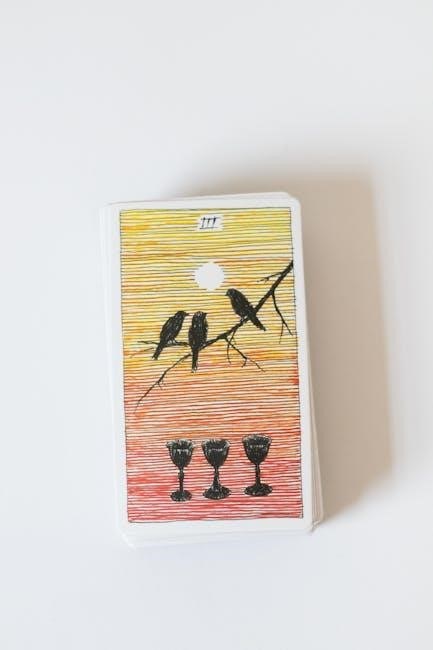
The Minor Arcana‚ consisting of 56 cards‚ reflects the nuances of daily life – our emotions‚ thoughts‚ actions‚ and material circumstances. Unlike the Major Arcana’s grand themes‚ these cards address the practicalities and challenges we encounter regularly. They are divided into four suits: Wands‚ Cups‚ Swords‚ and Pentacles‚ each representing a different aspect of the human experience.
These cards detail situations‚ relationships‚ and internal states. A card like the Five of Cups might indicate grief over a loss‚ while the Seven of Wands suggests standing your ground. Learning to interpret the Minor Arcana involves observing the imagery‚ trusting your intuition‚ and relating the cards to your current circumstances. They provide specific guidance on navigating everyday hurdles and making informed decisions.
Suits of the Minor Arcana – Wands‚ Cups‚ Swords‚ Pentacles
The four suits of the Minor Arcana each embody distinct energies. Wands represent passion‚ creativity‚ and willpower – the spark of inspiration and taking action. Cups delve into emotions‚ relationships‚ and intuition‚ reflecting our inner world and connections with others. Swords symbolize intellect‚ logic‚ and truth‚ often indicating challenges‚ conflict‚ and difficult decisions.
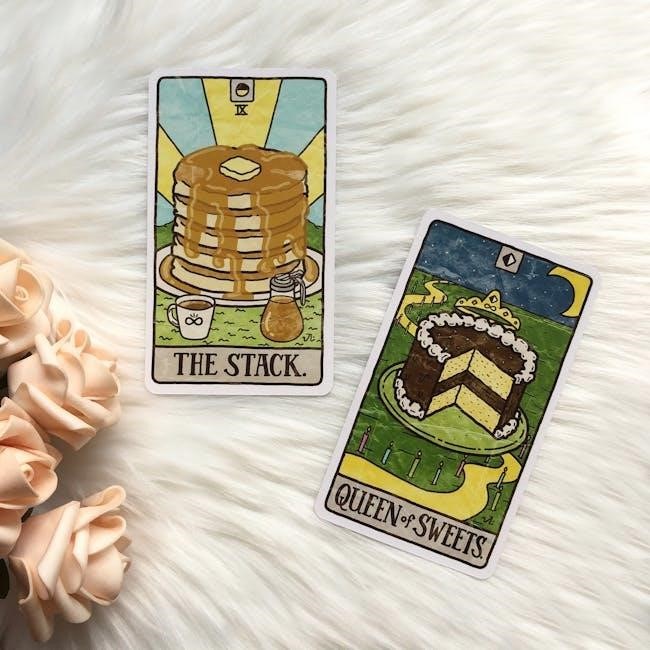
Finally‚ Pentacles ground us in the material realm‚ representing finances‚ career‚ and physical health. Understanding these elemental associations – Fire (Wands)‚ Water (Cups)‚ Air (Swords)‚ and Earth (Pentacles) – is crucial for interpreting the cards. Each suit offers unique insights into specific areas of life‚ providing a comprehensive view of your current situation and potential outcomes. Recognizing these energies unlocks deeper meaning.

Card Structure and Symbolism
Celestial Tarot’s rich imagery utilizes potent symbols‚ color correspondences‚ and number symbolism to unlock deeper meanings within each of the 78 cards.
Key Symbols in Celestial Tarot Imagery
Celestial Tarot decks are brimming with evocative symbolism‚ drawing heavily from astrological signs‚ planetary influences‚ and ancient mythological archetypes. Observing the imagery is crucial; don’t focus solely on memorizing meanings. The cards present narratives through visual cues.
Look for recurring motifs like stars‚ moons‚ suns‚ and constellations‚ representing cosmic energies and cycles. Figures often embody specific deities or archetypal characters‚ offering clues to the card’s message. Pay attention to the elements – earth‚ air‚ fire‚ and water – and how they manifest within the artwork.
Colors also hold significance‚ conveying emotional tones and energetic vibrations. Trust your intuition when interpreting these symbols; the cards speak to you personally. The 78 cards aren’t about rigid definitions‚ but rather a conversation between the imagery and your inner wisdom.
Color Correspondences and Their Meanings
Celestial Tarot utilizes color as a powerful language‚ enriching the symbolism within each of the 78 cards. Gold often signifies enlightenment‚ divine wisdom‚ and abundance‚ while silver represents intuition‚ the moon‚ and psychic abilities. Deep blues evoke tranquility‚ spirituality‚ and connection to the higher self.
Reds embody passion‚ energy‚ courage‚ and sometimes‚ conflict. Greens symbolize growth‚ healing‚ nature‚ and prosperity. Purples are associated with magic‚ transformation‚ and spiritual awakening. Earth tones – browns and ochres – ground the energy‚ representing stability and practicality;
Black can signify mystery‚ the unknown‚ or endings‚ while white represents purity‚ new beginnings‚ and clarity. Consider how colors interact within a card; their combination adds layers of meaning. Trust your instinctive response to the color palette‚ as it reveals subtle nuances.
Number Symbolism in the Tarot
Celestial Tarot’s 78 cards are deeply rooted in numerological significance‚ adding layers of interpretation beyond imagery; Numbers 1 through 9 represent stages of manifestation‚ with 1 symbolizing new beginnings and leadership‚ while 2 embodies duality‚ partnership‚ and balance.
The number 3 signifies creativity‚ expansion‚ and communication; 4 represents stability‚ structure‚ and practicality. 5 indicates change‚ challenge‚ and liberation. 6 embodies harmony‚ responsibility‚ and nurturing. 7 signifies introspection‚ spirituality‚ and hidden knowledge.
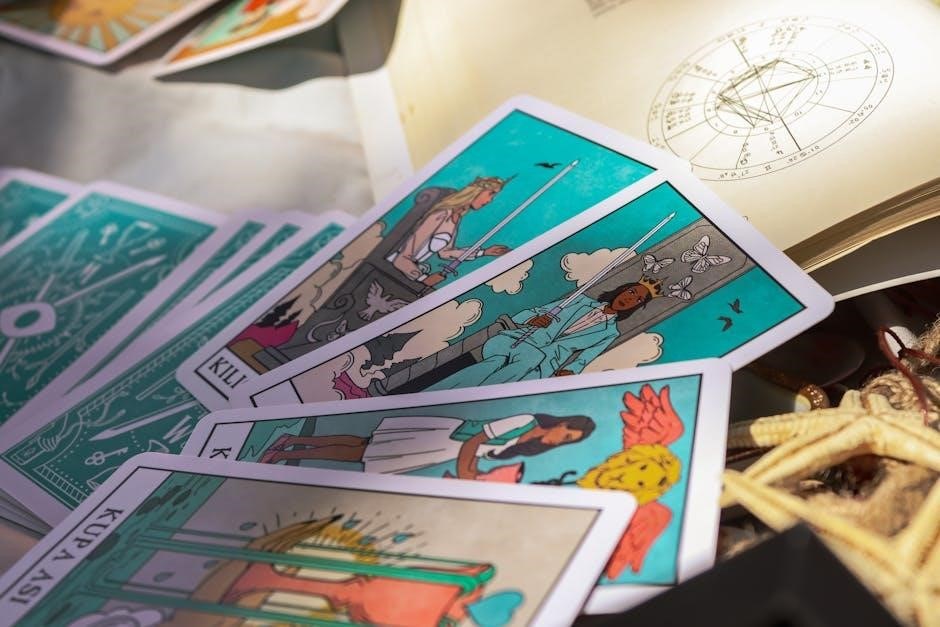
8 represents power‚ abundance‚ and karma‚ and 9 signifies completion‚ culmination‚ and wisdom. Court cards (Page‚ Knight‚ Queen‚ King) also carry numerical weight‚ reflecting their role within the unfolding narrative. Recognizing these numerical vibrations enhances your intuitive understanding of each card’s message.
Learning to Read the Cards
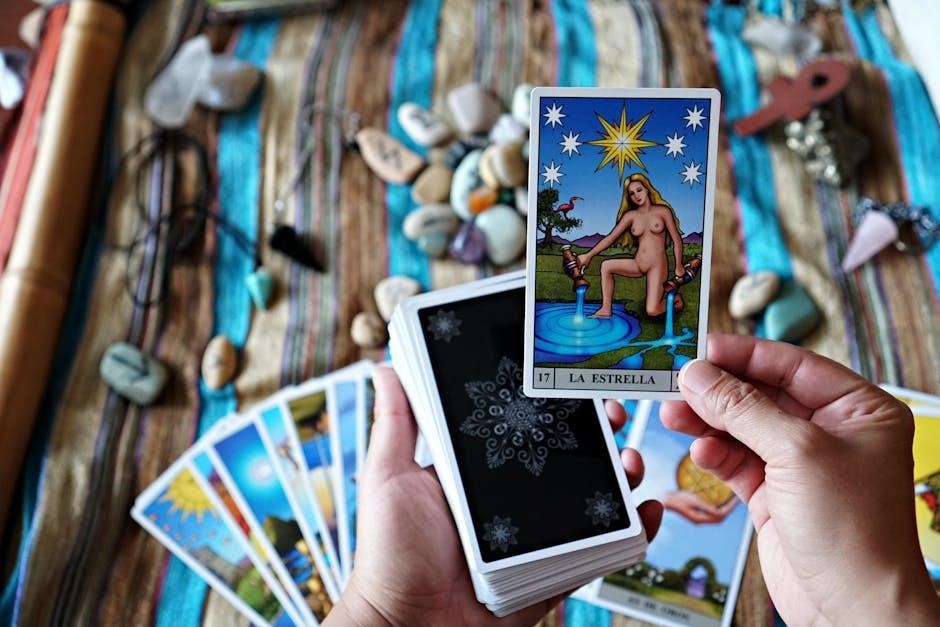
Unlock the 78 cards through observation‚ intuition‚ and basic spreads; trust your gut feelings‚ and relate imagery to personal experiences for guidance.
Basic Spreads for Beginners
Embarking on your tarot journey begins with simple spreads. The Three-Card Spread is ideal – past‚ present‚ and future – offering a concise overview. For deeper insight‚ try the Celtic Cross‚ though it’s more complex‚ revealing layers of influence.
Beginners should focus on single-card draws for daily guidance‚ fostering intuition. The Horseshoe Spread illuminates potential outcomes‚ while the Relationship Spread clarifies dynamics between individuals. Remember‚ tarot isn’t about predicting a fixed future‚ but understanding current energies and potential paths.
Don’t be intimidated by the 78 cards; start small‚ practice regularly‚ and allow your intuition to blossom. Observe the card’s imagery‚ note your initial feelings‚ and connect the symbolism to your question. Experiment with different spreads as your confidence grows.
Intuition and Connecting with the Cards
Tarot reading transcends memorization; it’s a dialogue with your intuition. Before each reading‚ center yourself – breathe deeply‚ meditate‚ or simply quiet your mind. Handle the cards with reverence‚ shuffling them mindfully‚ imbuing them with your energy.
Don’t overthink the meanings. Observe the imagery‚ colors‚ and symbols‚ noting your immediate emotional response. What story does the card tell you? Trust your gut feelings; they are often more accurate than intellectual analysis.
Regular practice strengthens your connection. Journal your readings‚ noting patterns and insights. The 78 cards are mirrors reflecting your inner landscape; embrace the journey of self-discovery and allow your intuition to guide you.
Reversed Cards: Exploring Shadow Aspects
Reversed cards don’t signify “bad” luck‚ but rather internal blockages or challenges hindering a card’s positive expression. They illuminate shadow aspects – repressed emotions‚ limiting beliefs‚ or unresolved issues demanding attention.
Consider a reversed card as an invitation for introspection. What aspects of the card’s meaning are you resisting or denying? Where are you feeling stuck or powerless? It’s a call to address these areas for growth.
Don’t dismiss reversals; embrace them as valuable insights. They offer a deeper understanding of the situation and your role within it. The 78 cards‚ even reversed‚ provide guidance towards wholeness and self-awareness‚ prompting necessary inner work.
Celestial Tarot and Astrology
Celestial Tarot beautifully intertwines with astrology‚ linking the 78 cards to planetary energies and zodiac signs for deeper‚ personalized interpretations.
Planetary Associations with the Major Arcana
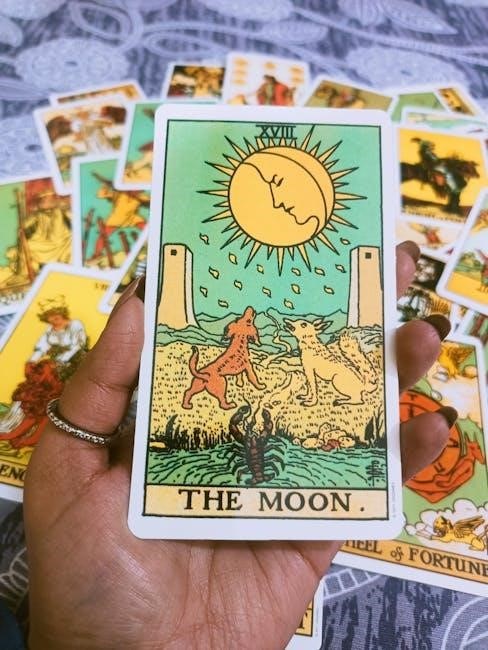
The Major Arcana‚ representing life’s significant archetypes‚ resonates deeply with planetary influences. Each card embodies a specific celestial energy‚ enriching interpretations. For instance‚ The Sun often aligns with the radiant energy of our star‚ symbolizing vitality and success. The Moon connects to lunar cycles‚ representing intuition and the subconscious.
Mars is frequently associated with The Tower‚ signifying sudden change and disruption‚ mirroring the planet’s assertive nature. Jupiter’s expansive energy finds expression in The Wheel of Fortune‚ indicating cycles of luck and opportunity. Saturn‚ representing structure and limitations‚ corresponds with The Hermit‚ encouraging introspection. Understanding these planetary links unlocks nuanced layers within each card‚ providing a richer‚ more astrologically informed reading experience‚ enhancing the 78-card system’s depth.
Zodiacal Correspondences in the Minor Arcana
The Minor Arcana’s four suits – Wands‚ Cups‚ Swords‚ and Pentacles – each connect to specific zodiacal elements‚ adding another layer of celestial understanding. Wands‚ fiery and energetic‚ align with Aries‚ Leo‚ and Sagittarius‚ representing passion and action. Cups‚ embodying emotions and relationships‚ resonate with Cancer‚ Scorpio‚ and Pisces‚ mirroring water signs’ depth.
Swords‚ associated with intellect and challenges‚ correspond to Gemini‚ Libra‚ and Aquarius‚ reflecting air signs’ analytical nature. Pentacles‚ grounded in practicality and material concerns‚ link to Taurus‚ Virgo‚ and Capricorn‚ embodying earth signs’ stability. Recognizing these zodiacal ties allows for a more holistic reading‚ integrating astrological insights into the interpretation of the 78 cards‚ revealing subtle nuances and personalized meanings.
Using Astrological Timing with Tarot Readings
Enhance your Tarot practice by synchronizing readings with astrological transits. Consider the current planetary positions and their aspects to the natal chart of the querent. For example‚ a reading during a Mercury retrograde might focus on communication delays or revisiting past issues. Venus transits can illuminate matters of love and relationships‚ while Mars aspects suggest action and energy.
Utilizing the Moon’s phases adds further depth; new moons are ideal for setting intentions‚ while full moons reveal culminations. Aligning the timing with significant astrological events amplifies the reading’s relevance and provides a more nuanced understanding of the 78 cards’ messages‚ offering a powerful blend of celestial guidance and intuitive insight.

Resources for Further Study
Explore deeper knowledge through recommended books‚ online tarot communities like Little Red Tarot‚ and diverse Celestial Tarot decks for expanded learning.
Recommended Books on Celestial Tarot
Delving into the world of Celestial Tarot requires a solid foundation‚ and several books offer invaluable insights. While a definitive “Celestial Tarot” specific guide might be emerging with the growing interest‚ foundational tarot texts are crucial. Explore books covering tarot symbolism‚ astrology‚ and numerology to enhance your understanding of the 78 cards.
Consider works that focus on intuitive reading techniques‚ as this practice is central to Celestial Tarot. Look for resources that emphasize connecting with the cards’ imagery and trusting your gut feelings. Books detailing color correspondences and number symbolism will also prove beneficial. Remember‚ tarot reading doesn’t require memorization; observation and intuition are key. Seek out texts that encourage a flowing‚ spiritual approach to readings‚ offering guidance rather than rigid predictions.
Online Communities and Websites
Expanding your Celestial Tarot journey benefits greatly from connecting with fellow enthusiasts online. Numerous platforms foster learning and sharing. Little Red Tarot is a valuable resource for exploring diverse decks and reading techniques‚ offering a welcoming space for beginners and experienced readers alike.
Explore dedicated tarot forums and social media groups (like those on Facebook or Reddit) where you can discuss readings‚ ask questions‚ and share interpretations of the 78 cards. TikTok‚ with its 12.3 million #tarot posts‚ provides a vibrant‚ albeit sometimes overwhelming‚ source of inspiration. Be discerning and focus on content that resonates with your intuition. Remember to approach online advice with a critical eye‚ prioritizing personal connection with the cards.
Choosing Your First Celestial Tarot Deck
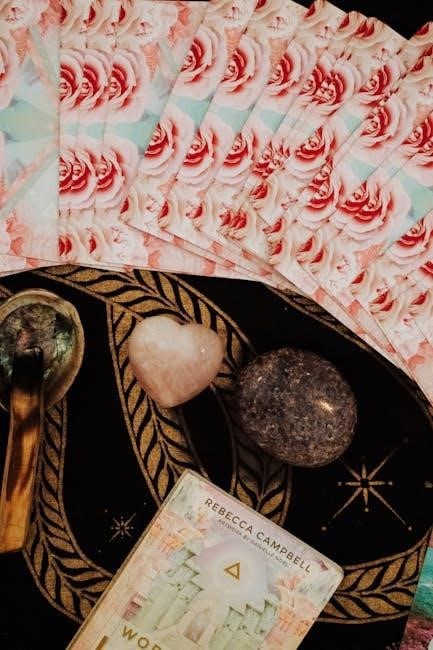
Selecting your initial Celestial Tarot deck is a deeply personal experience‚ akin to choosing a trusted companion. Don’t rush the process; it’s crucial to find a deck that resonates with your intuition. Consider visiting local stores to physically browse options‚ if possible‚ and hold different decks in your hands.
Online retailers‚ such as Little Red Tarot and others‚ offer a vast selection. Pay attention to the artwork – does it speak to you? Does the imagery align with your understanding of the 78 cards and celestial influences? Trust your gut feeling. A deck should feel comfortable and inviting‚ encouraging you to explore its symbolism and unlock its wisdom. Remember‚ there’s no “right” deck‚ only the one that’s right for you.